Middlesbrough rose from a modest hamlet of forty souls to an industrial powerhouse through the furnace of Welsh ironworking expertise. By 1861, Welsh workers constituted nearly half the town's ironworkers and one in twenty of the total population, leaving an imprint that still echoes today.
The Ironopolis Moniker
The nickname "Ironopolis" emerged in the mid-1870s when Middlesbrough was producing one third of the United Kingdom's pig iron output. The term first appeared in print in The Northern Echo on 23 February 1870, where the newspaper noted that Middlesbrough had "sometimes been designated the Ironopolis of the North." Pig iron production had risen tenfold between 1851 and 1856, and the town never ceased to live up to that designation.
The Welsh Pioneers
John Vaughan, born in Worcester to Welsh parents, arrived with iron in his blood. After honing his craft at the renowned Dowlais Ironworks in South Wales, Vaughan co-founded Bolckow Vaughan and, on 8 June 1850, discovered the main seam of ironstone in the Cleveland Hills. This discovery unlocked the region's industrial potential and drew thousands of Welsh ironworkers northward.
Edward Williams followed in 1865. Born in Merthyr Tydfil and grandson of the celebrated Welsh Bard Iolo Morganwg, Williams became general manager of Bolckow Vaughan and later Mayor of Middlesbrough in 1872. His sons continued the tradition: Aneurin Williams served as Liberal MP for Consett from 1918, whilst Penry Williams became Liberal MP for Middlesbrough itself.
Streets of Slate and Steel
Welsh migrants came almost exclusively from the iron-smelting and coal districts of South Wales, bringing with them technical expertise that transformed Middlesbrough's economy. Place names such as "Welch Cottages" and "Welch Place" appeared around the Vulcan works, markers of a community that established itself sometime before the 1840s. By the 1870s, Welsh chapels dotted the town; one alone reputedly seated five hundred worshippers.
The Welsh Baptist chapel was active by 1858, and St Hilda's Anglican church began providing services in Welsh to serve the growing congregation. These institutions anchored a community that maintained its cultural identity whilst integrating into Middlesbrough's expanding industrial fabric.
The Eisteddfod on Teesside
In 1890, Middlesbrough Town Hall hosted the first Cleveland and Durham Eisteddfod. By the early twentieth century, it had become the largest annual Eisteddfod outside Wales itself. The 1911 programme featured twenty-two classes of musical competition, though by then only two classes required Welsh language content; assimilation was already advancing.
The event was notably inclusive: Irish Catholic choirs participated alongside Welsh and English competitors. In January 1900, a speaker addressing the Eisteddfod described Middlesbrough as "that portion of Wales, called North East England," acknowledging the cultural affinity that persisted decades after the first migrants arrived.
Political Radicalism
Industrial Wales was noted for "radical Liberal-Labour" politics, and this tradition took root in Middlesbrough. Sir Horace Davey, addressing a local audience, stated that "it was scarcely an exaggeration to say that Welshmen had founded Middlesbrough." By 1900, the town's political complexion had shifted enough that Penry Williams and Jonathan Samuel won parliamentary seats for the Liberal Party.
Not everyone welcomed this influence. When Samuel lost his seat, a Unionist opponent complained that the town had been "forced to submit to the indignity of being trailed ignominiously through the mire by Welsh constituents." The comment revealed lingering tensions beneath the surface of integration.
The Apollo Male Voice Choir
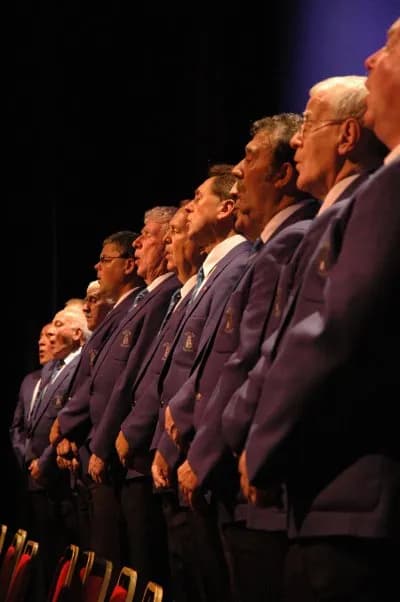
The Apollo Male Voice Choir, formed in 1887, originated from a tragedy: Welsh ironworkers performed a concert to raise funds for widows and orphans after a workplace accident. The choir endured for 125 years, outlasting the Welsh-speaking community that founded it. By 2012, when the Dorman Museum marked the anniversary with an exhibition, the last Welsh member, Tom Jones, had died circa 2010. Yet the choral tradition remained part of the town's cultural fabric.
The Lasting Legacy
What began as an industrial migration became a cultural transformation. Welsh technical knowledge, political traditions, and communal institutions reshaped Middlesbrough's identity. The chapels have closed and the Welsh language is rarely heard in the town's streets, but the choral tradition persists as a living reminder of the ironworkers who travelled from Dowlais and Merthyr Tydfil to build Ironopolis.