Two Icons That Define Middlesbrough
Middlesbrough’s identity is closely tied to two remarkable landmarks that have shaped the town for well over a century. The Transporter Bridge and Albert Park stand as enduring symbols of the town’s industrial heritage and its commitment to public spaces, each telling a distinct story about the community they serve.
The Transporter Bridge: An Engineering Marvel
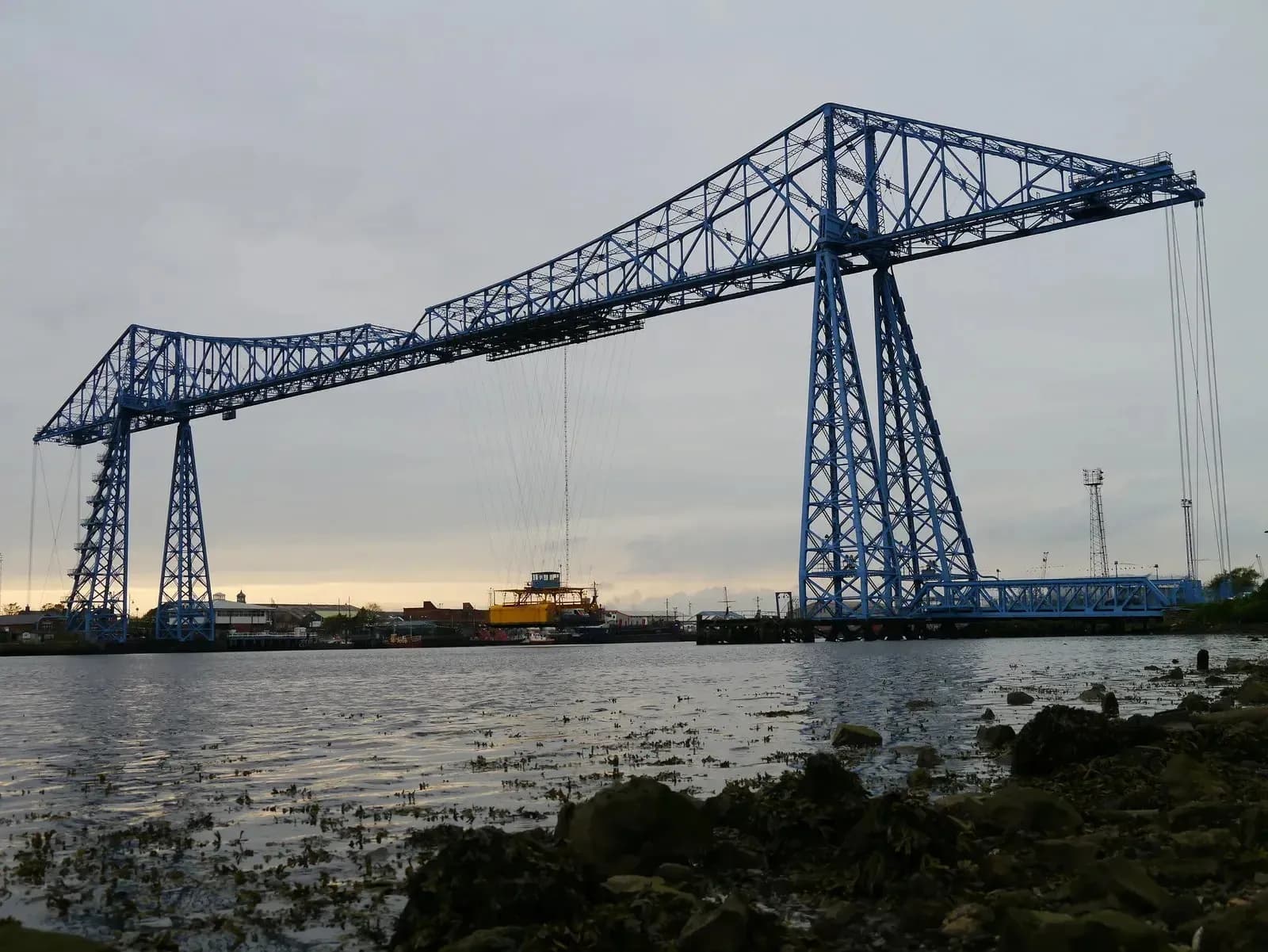
The Middlesbrough Transporter Bridge has dominated the River Tees skyline since 1911. Designed by engineer Charles Smith and constructed by Sir William Arrol & Co., the bridge remains the longest transporter bridge in the world, measuring 260 metres between its two towers. Its distinctive design was created to allow vehicles and pedestrians to cross the river via a suspended gondola travelling beneath the high-level span.
The bridge was built to replace a ferry service while avoiding the need for a traditional bridge that would impede shipping traffic on the River Tees. Its Grade II* listed status reflects both its architectural significance and its rarity. Only three such bridges remain in the United Kingdom, with Middlesbrough’s being the oldest and most substantial.
The Transporter Bridge has been closed since 2019 and is not currently carrying vehicles or pedestrians across the River Tees. However, it remains one of Middlesbrough’s most recognisable landmarks, and it is hoped that detailed plans for its restoration and return to use will be developed later this year, subject to the necessary funding being available.
Over the years, the bridge has also become known for special events, including bungee jumping, which offered participants the unique experience of leaping from its 49-metre-high platform.
Albert Park: A Victorian Legacy
Albert Park, opened in 1868, represents one of the finest examples of Victorian municipal park design in northern England. Laid out by landscape architect William Barratt, the park was gifted to the town by Henry Bolckow, one of Middlesbrough’s founding ironmasters, at a cost of £30,000. The park was named in honour of Prince Albert, the consort of Queen Victoria, who had died seven years earlier.
The park covers approximately 27 hectares and features a boating lake, bandstand, fountains, and an impressive collection of mature trees. Its central fountain, added in 1869, remains a focal point for visitors. The park’s design follows the Victorian ideal of providing green space for public recreation and reflection, with carefully laid-out pathways, floral displays and spaces for quiet contemplation.
Among the park’s notable features is a statue of Brian Clough, the legendary football manager who began his playing career at Middlesbrough FC. The statue, unveiled in 2007, recognises his contribution to the town and his enduring connection to the area.
Community Spaces in Modern Middlesbrough
Both landmarks continue to hold a special place in the hearts of Middlesbrough residents. The Transporter Bridge has evolved from functional infrastructure into a powerful symbol of the town, appearing on the Middlesbrough FC badge and in countless photographs, paintings and postcards. It represents the town’s industrial ingenuity and its enduring connection to the River Tees.
Albert Park remains one of the town’s most visited green spaces, hosting events throughout the year and providing a haven for residents seeking respite from urban life. The park has undergone several restoration projects to preserve its Victorian character while meeting modern recreational needs.
Preserving the Past, Serving the Present
The ongoing care of both the Transporter Bridge and Albert Park reflects Middlesbrough’s commitment to preserving its heritage. These landmarks connect present-day residents to the generations who built, used and enjoyed them, offering continuity in a town that has undergone profound economic and social change.
For visitors and residents alike, the Transporter Bridge and Albert Park offer distinct perspectives on Middlesbrough’s character. One speaks to industrial innovation and engineering ambition, while the other reflects civic pride and the Victorian vision of public space. Together, they form an essential part of the town’s story.