James Cook, one of the most accomplished navigators and cartographers in British history, was born in a modest clay cottage in the village of Marton, approximately eight miles from the sea. His life journey from a farm labourer's son to a captain commanding voyages that mapped vast portions of the Pacific Ocean remains a cornerstone of Middlesbrough's heritage.
Early Years in the Teesside Countryside
Cook entered the world on 7 November 1728 in Marton, then part of the North Riding of Yorkshire. His father, also named James Cook, was a Scottish farm labourer from Ednam in Roxburghshire. His mother, Grace Pace, hailed from Thornaby-on-Tees. Cook was the second of eight children, and his family's circumstances were humble.
In 1736, when young James was eight years old, his father secured a position as farm manager at Airey Holme in Great Ayton. The family relocated, and Cook's education was arranged by his father's employer, Thomas Skottowe, who paid for the boy to attend Postgate School, a charity school in Great Ayton. Cook studied there from 1736 until 1741, when he left at the age of 16 to work alongside his father on the farm.
The teenager's horizons broadened in 1745 when he moved to Staithes, a fishing village some 20 miles away, to serve an apprenticeship with William Sanderson, a grocer and haberdasher. After 18 months, he left for Whitby, where ship owners John and Henry Walker introduced him to the merchant navy. This marked the beginning of a maritime career that would transform him from an apprentice into one of Britain's most celebrated explorers.
Rise Through the Ranks
Cook's talents as a navigator and cartographer became evident during his service in the Seven Years' War. He joined the Royal Navy in 1755 and distinguished himself through his meticulous charting work. Between 1763 and 1767, he produced accurate maps of Newfoundland and the St Lawrence River, charts that surpassed most contemporary efforts in precision. His observations of the 1766 solar eclipse in Newfoundland drew the attention of the Royal Society.
The Three Voyages That Changed Geography
Cook's first Pacific expedition, commencing in 1768 aboard HMS Endeavour, set a new standard for scientific exploration. The voyage included observation of the Transit of Venus in Tahiti in 1769, a rare astronomical event that would help calculate the distance between the Earth and the Sun. During this expedition, Cook became the first recorded European to encounter the eastern coast of Australia and completed the first recorded circumnavigation of New Zealand.
The second voyage, from 1772 to 1775 aboard HMS Resolution, sought the legendary Terra Australis Incognita, a supposed southern continent. Cook crossed the Antarctic Circle during this expedition, demonstrating that no such vast continent existed in the temperate zones.
His final voyage, beginning in 1776, sought the Northwest Passage. In January 1778, he became the first known European to visit the Hawaiian Islands. The expedition continued northward in search of a route connecting the Pacific and Atlantic, but the passage remained elusive.
Scientific Contributions
Beyond exploration, Cook made significant contributions to the prevention of scurvy, the scourge of long voyages. His methods for maintaining crew health through proper diet and hygiene earned him the Royal Society's Copley Gold Medal. His detailed astronomical observations and cartographic work provided data that remained in use for decades.
Death in the Pacific
Cook's life ended violently on 14 February 1779 at Kealakekua Bay in Hawaii. During a dispute over a stolen cutter, he attempted to take Kalaniʻōpuʻu, the ruling chief of Hawaii Island, hostage as leverage. Hawaiians on the beach killed Cook and four British marines. According to Hawaiian custom, Cook's body was dismembered and distributed to chiefs, an honour accorded to high-ranking adversaries. Partial remains were later returned to the British and buried at sea with full military honours.
Middlesbrough's Enduring Connection
The village of Marton has not forgotten its most famous son. St Cuthbert's Church, where Cook was baptised, stands as a 12th-century monument to local history. A stained-glass window within commemorates the explorer.
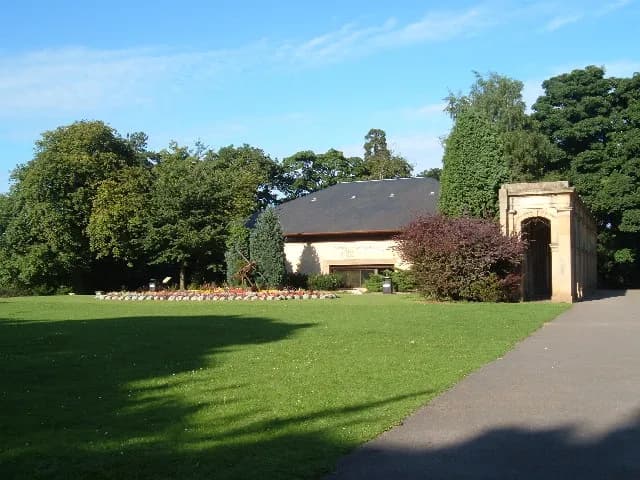
The Captain Cook Birthplace Museum opened on 28 October 1978, the 250th anniversary of his birth. Situated in Stewart Park, a 120-acre public space given to the people of Middlesbrough by Councillor Thomas Dormand Stewart in 1924, the museum occupies the site where Cook's clay cottage once stood. The original cottage deteriorated by 1788 and was demolished in the 1790s, but a Grade II listed pink granite urn erected in 1852 by H. W. F. Bolckow of Marton Hall marks the approximate location.
The museum, open from April through November, attracts visitors interested in Cook's life and the Age of Exploration. Its galleries trace his journey from the Teesside countryside to the Pacific, displaying artefacts and documents that illuminate both the man and his era.
The Cottage That Crossed the World
A curious footnote to Cook's Middlesbrough story involves the cottage his parents built in Great Ayton in 1755. In 1933, Australian philanthropist Sir Russell Grimwade purchased the structure for £800, had it dismantled brick by brick, and shipped the materials to Melbourne aboard the Port Dunedin. The cottage was reconstructed in Fitzroy Gardens and opened on 15 October 1934 as part of Melbourne's centenary celebrations. Whether Cook ever actually lived in the dwelling remains a matter of historical debate, though he almost certainly visited his parents there.
A granite obelisk now marks the original site of the Cook family cottage in Great Ayton. Constructed from granite taken from Point Hicks, the first land Cook sighted in Australia, it serves as a physical link between his Yorkshire origins and his Pacific discoveries.
Legacy in Modern Middlesbrough
Cook's name remains woven into the fabric of the borough. James Cook railway station serves the university hospital that also bears his name. Captain Cook Primary School in Marton educates new generations of local children. The Captain Cook Schoolroom Museum in Great Ayton preserves another site from his early years.
The explorer's story embodies a narrative that resonates with Middlesbrough: a figure of global significance who emerged from modest, rural beginnings. His meticulous approach to navigation and cartography, his commitment to scientific inquiry, and his determination to understand the world beyond established maps reflect values that the region continues to celebrate.
The Captain Cook Birthplace Museum and Stewart Park stand as tangible reminders that world-changing journeys can begin in the most unremarkable of places, a clay cottage in a Yorkshire village that has since been absorbed into the expanding town of Middlesbrough.